
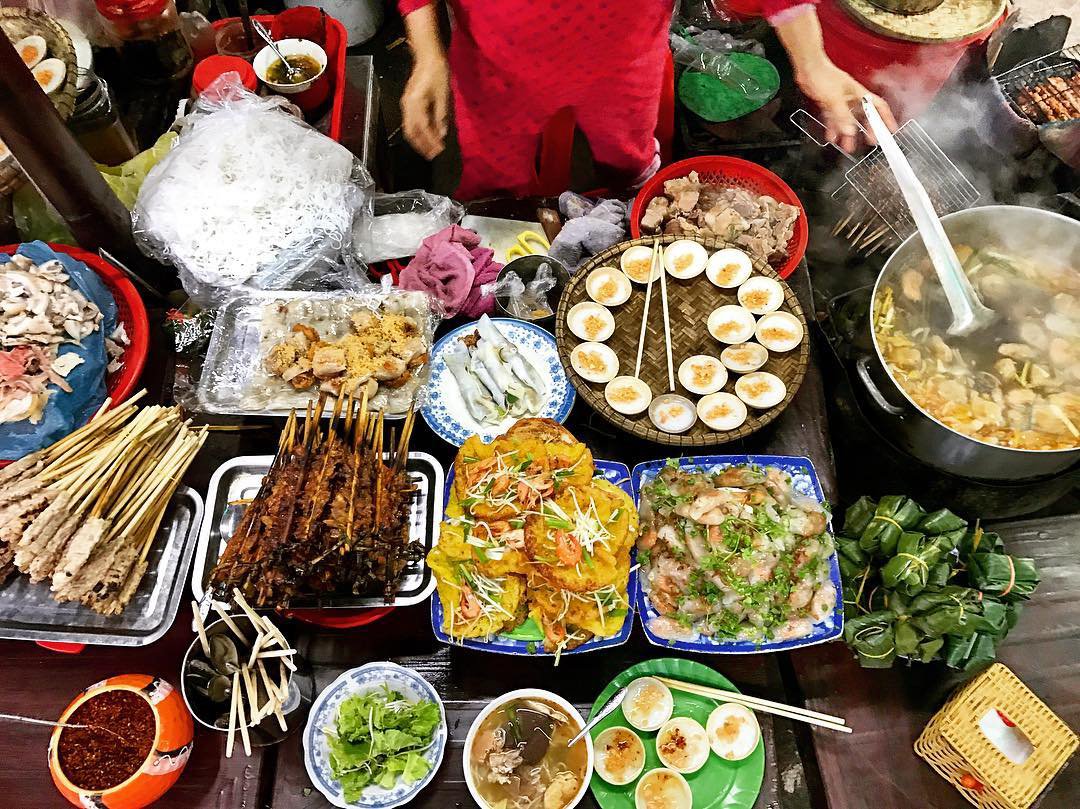
Hue, the poetic former imperial capital of Vietnam, sits gracefully on the banks of the Perfume River. Known for its majestic citadel, royal tombs, and pagodas, Hue is also considered the culinary heart of Vietnam. Unlike other cities that emphasize either luxury dining or street food, Hue presents both worlds in harmony: elegant royal cuisine crafted for kings and humble folk dishes enjoyed in markets and family homes.
Visitors often ask: what to eat in Hue to capture its essence? The answer requires tasting both categories – from a lavish royal banquet with symbolic dishes to a bowl of mussel rice or beef noodle soup at a noisy local market. Hue’s cuisine is more than food; it is a cultural narrative that tells the story of emperors and commoners alike.
The Dual Soul of Hue Cuisine
Hue’s food culture reflects the city’s history as the Nguyen dynasty’s capital for over a century. While royal chefs perfected their art in the Forbidden Purple City, ordinary people in villages and markets created rustic but equally delicious dishes.
This duality makes Hue unique in Vietnam:
- Royal Cuisine (ẩm thực cung đình): Luxurious, symbolic, artfully presented, often reserved for emperors and aristocrats.
- Folk Cuisine (ẩm thực dân gian): Simple, resourceful, and flavorful, crafted from everyday ingredients like rice, herbs, and seafood from the Perfume River and nearby lagoons.
To truly understand Hue, one must eat like both a king and a commoner.
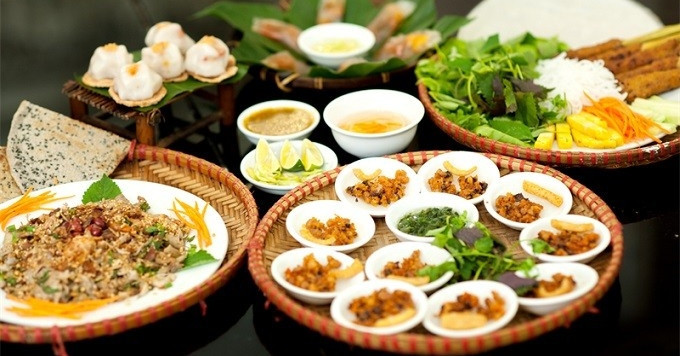
Royal Cuisine of Hue – Elegance on the Plate
History and Significance
Royal cuisine emerged during the Nguyen dynasty (1802–1945). The emperors demanded not only nourishment but also artistic presentation and symbolic meaning. Meals were seen as a reflection of imperial power and refinement. It is said that the royal chefs had to invent over 50 new dishes per month to keep the emperor entertained, resulting in a repertoire of hundreds of unique recipes.
Key Features of Royal Cuisine
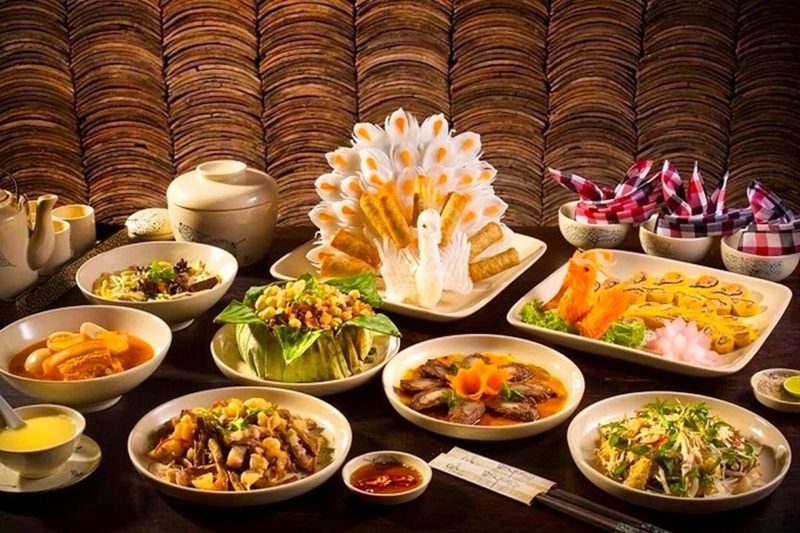
- Premium Ingredients: Only the freshest seafood, finest cuts of meat, and rare herbs were used.
- Complex Preparation: Multiple cooking methods such as steaming, simmering, and slow braising combined in one dish.
- Artistic Presentation: Dishes shaped into dragons, phoenixes, flowers, and landscapes.
- Symbolism: Food was associated with prosperity, longevity, fertility, or harmony.
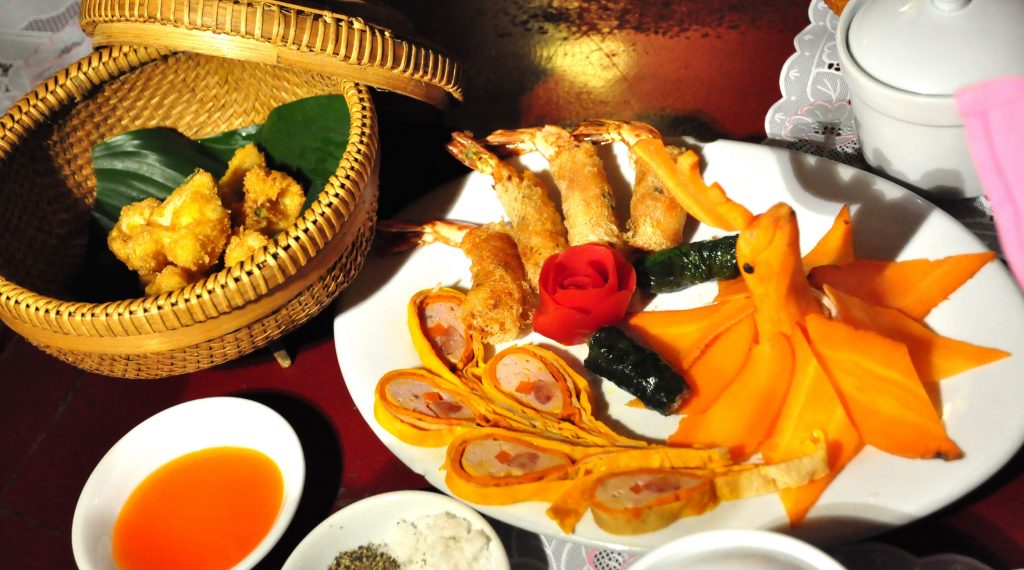
Famous Royal Dishes
- Nem công, chả phượng: Legendary dishes symbolizing the emperor’s majesty. Though modern versions use substitutes, the taste remains refined and aromatic.
- Royal sweet soups (chè cung đình): Hue is famous for its variety – lotus seed with longan, roasted pork wrapped in tapioca served in syrup, taro sweet soup, and more. Each type offers a balance of sweetness and fragrance.
- Bird’s nest and shark fin: Luxury ingredients that signified wealth and privilege.
- Phu thê cake: A dessert representing loyalty and prosperity, once served at royal weddings.
- Royal meal (cơm vua): A full banquet with dozens of small portions, displayed in porcelain bowls on golden trays. A single meal could contain up to 50 different dishes.
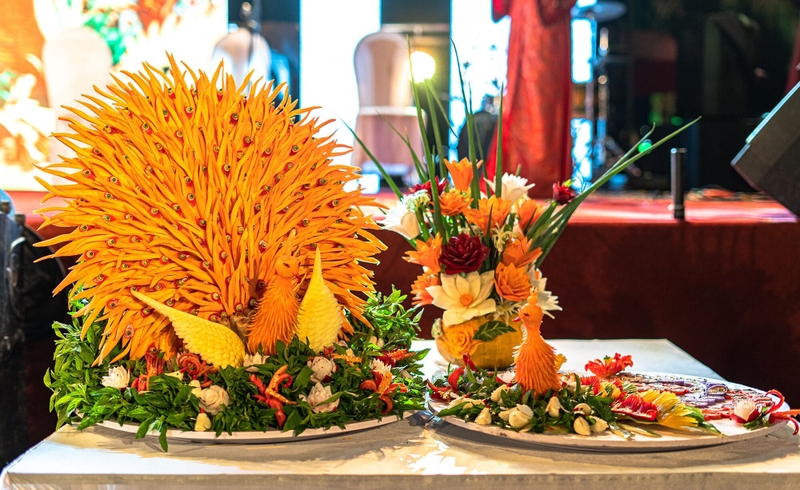
Experiencing Royal Meals Today
In modern Hue, many restaurants recreate the “royal dining experience.” Visitors can wear emperor or empress costumes, listen to Nhã nhạc cung đình Huế (Hue royal court music) – a UNESCO heritage – and dine on elaborately prepared dishes. The experience is theatrical, immersive, and cultural, allowing travelers to step back into the grandeur of the Nguyen dynasty.

Hue Market Food – Rustic but Flavorful
The Role of Folk Cuisine
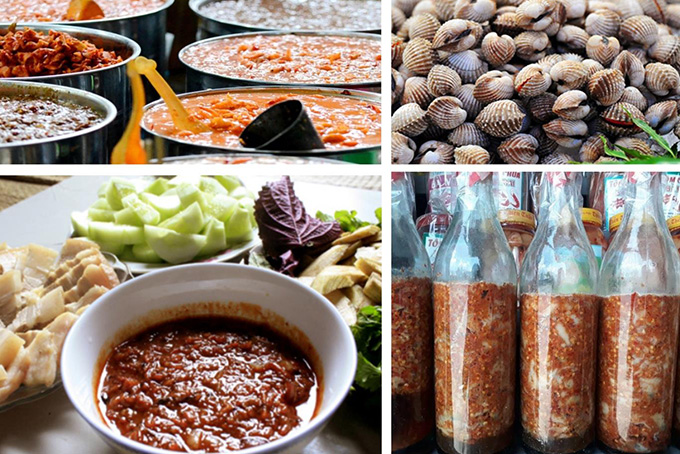
If royal meals highlight sophistication, folk cuisine shows resourcefulness. Ordinary people used humble ingredients – leftover rice, river mussels, banana leaves – but turned them into iconic dishes. Hue is known for having more than 1,000 kinds of traditional dishes, many of which originated in local markets.
Must-Try Market Foods
- Bún bò Huế (Hue beef noodle soup): Perhaps Hue’s most famous export. A spicy broth flavored with lemongrass, annatto oil, shrimp paste, beef bones, and chili creates an unforgettable taste. Served with thick noodles, beef shank, pork knuckles, and fresh herbs.
- Cơm hến (mussel rice): A true “poor man’s dish” transformed into a delicacy. Cold rice mixed with sautéed baby mussels, crunchy peanuts, fried pork skin, and herbs, topped with pungent shrimp paste. Cheap, filling, and full of flavor.
- Bánh bèo, bánh lọc, bánh nậm: Steamed rice cakes with shrimp, pork, or mung beans. Eaten with sweet chili fish sauce. These small dishes are often enjoyed as snacks or light meals.
- Bánh khoái: A crispy rice pancake filled with pork, shrimp, and bean sprouts. Eaten with a special thick peanut sauce.
- Bún thịt nướng: Vermicelli noodles topped with grilled pork, herbs, and fish sauce. A simple dish packed with fresh flavors.
- Cháo bột cá lóc: Snakehead fish porridge, comforting and nourishing, popular among locals.
- Chè Huế (Hue sweet soups): Hue is considered Vietnam’s sweet soup capital. Favorites include corn pudding (chè bắp), lotus seed soup, taro soup, and mixed jelly desserts.
Hue’s Vibrant Markets
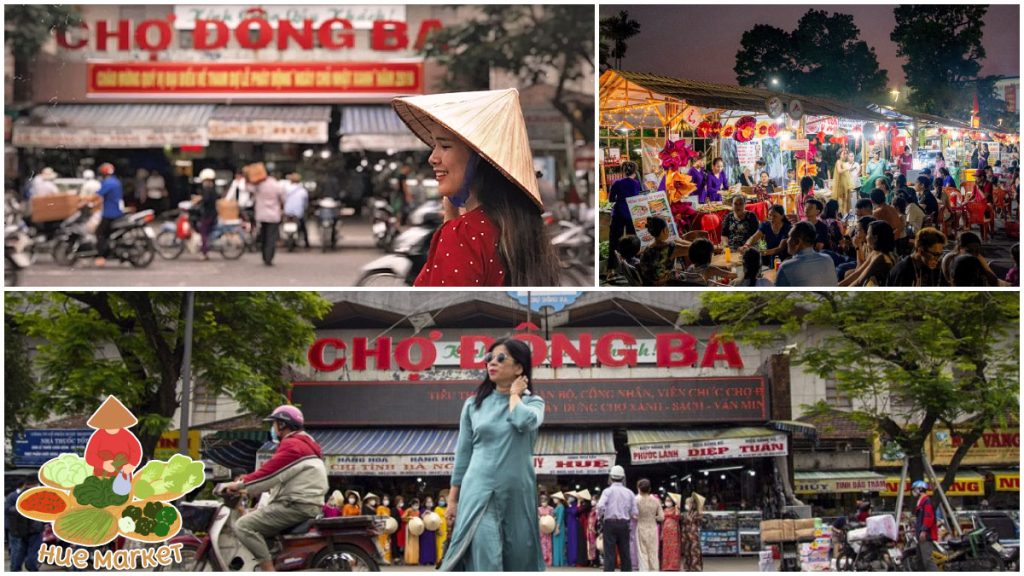
- Dong Ba Market: The most famous market, offering everything from street food to handicrafts.
- An Cuu Market: Known for cheap, authentic local dishes.
- Ben Ngu Market: A smaller market but full of charm, where locals shop daily.
Eating at these markets means not only tasting delicious dishes but also immersing yourself in Hue’s daily life – the chatter of vendors, the colors of fresh produce, and the fragrance of steaming broths.
Vegetarian Cuisine in Hue – Simplicity and Spirituality
Hue is also known as the capital of Buddhism in Vietnam. With hundreds of pagodas, vegetarianism is deeply ingrained in local culture. Unlike simple vegetarian food elsewhere, Hue’s vegetarian dishes are highly creative: mock duck made from mushrooms, vegetarian nem rán (spring rolls), lotus seed rice, or vegetarian bánh bèo.
For travelers, this is an opportunity to enjoy meat-free meals that are still bursting with flavor. Restaurants like Lien Hoa Vegetarian Restaurant and Tinh Tam Vegetarian Restaurant are highly recommended.
Blending Royal and Folk Flavors
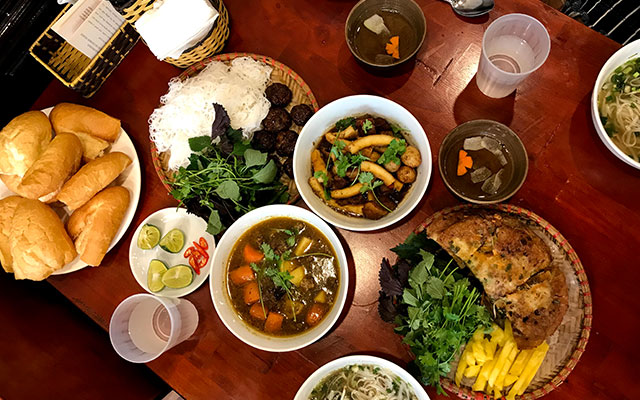
What makes Hue’s food culture unique is the coexistence of both traditions.
- A royal banquet shows artistry, elegance, and symbolic meaning.
- A bowl of mussel rice or bún bò Huế reveals rustic ingenuity and bold flavors.
Together, they create a balance that mirrors Hue’s identity – a city of emperors and ordinary people, grandeur and humility.
Where to Eat in Hue
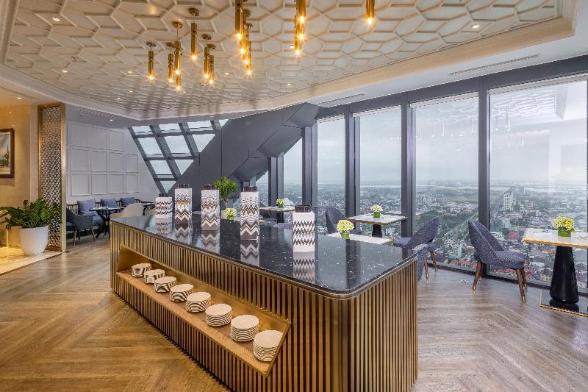
For Royal Cuisine
- An Dinh Palace restaurants – recreate authentic royal meals.
- Restaurants on Le Loi Street – offer royal-style dining with performances.
For Market Cuisine
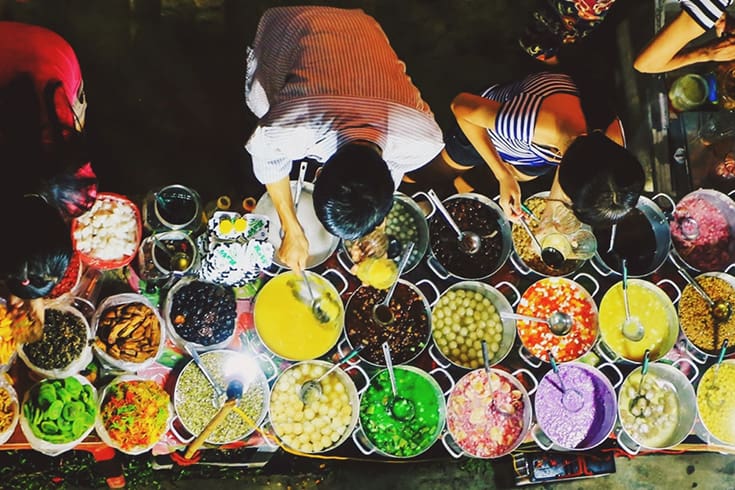
- Dong Ba Market – the best place to sample a wide variety of dishes.
- Street food stalls near the Perfume River – ideal for snacks in the evening.
For Vegetarian Food
- Lien Hoa Vegetarian Restaurant – famous among both locals and tourists.
- Tinh Tam Vegetarian Restaurant – offers creative and authentic Hue vegetarian meals.

Practical Eating Tips in Hue
- Morning: Try bún bò Huế when the broth is freshest.
- Afternoon: Eat cơm hến or bánh Huế (bánh bèo, bánh lọc) for a light but satisfying meal.
- Evening: Experience a royal-style dinner with traditional music.
- Snacks: Don’t miss chè Huế or bánh khoái while exploring the city.
- Markets: Visit with an empty stomach – you’ll want to try everything.
Conclusion – Hue, Vietnam’s Culinary Capital
Asking “what to eat in Hue?” is like asking how to experience the city’s soul. The answer lies in exploring both extremes – the refinement of royal cuisine and the warmth of market food. From an opulent royal meal once served to emperors to a humble bowl of mussel rice in a noisy market, each bite is a glimpse into Hue’s history and culture.
For food lovers, Hue is not just a destination but an unforgettable journey through Vietnam’s culinary heart. Its flavors, both majestic and rustic, linger long after you leave, reminding you that food is not just sustenance – it is heritage, memory, and identity.


