

The Mekong Delta, located in the southern part of Vietnam, is rich in both cultural heritage and traditional practices. Among its most iconic features are the floating markets. These markets, held on the vast network of rivers and canals, operate directly from boat to boat, creating a bustling and vibrant atmosphere unique to the region. They offer an unparalleled opportunity to witness authentic local life and age-old trading customs.
As a tour guide, I’ve accompanied numerous visitors through these floating markets over the years and witnessed how they’ve transformed. In this guide, I’ll share insights and useful tips from my personal experience to help enhance your visit. Let’s begin!
Cai Rang Market: The Most Renowned Floating Market in the Mekong Delta
- Location: On the Can Tho River, near Cai Rang Bridge, An Binh Ward, Can Tho City, Vietnam
- Operating Hours: Daily from 6:30 AM to 9:30 AM, except during the Tet holidays
- Entrance Fee: Between €15 and €40
- Google Reviews: Rated 4.1 stars by 7,533 reviewers

Established in the early 1900s, Cai Rang Market is the largest floating market in the delta, situated only seven kilometers from central Can Tho. Every morning, especially between 6:30 and 9:30 AM, the river transforms into a lively marketplace. During Tet (Lunar New Year), the atmosphere becomes even more festive, though the market closes for four days as traders return home.

You’ll see around fifty boats brimming with fresh produce—fruits like pineapples, grapefruits, watermelons, and durians, as well as vegetables such as cassava, sweet potatoes, and yams—all sourced from surrounding farmlands. Besides produce, you can sample traditional dishes like hủ tiếu, bún mắm, bún thịt nướng, bánh mì, and bánh bao. Some boats even double as floating cafés, serving hot coffee, coconut juice, and ice-cold beverages.
A popular way to visit is by hiring a covered speedboat from Ninh Kiều Pier in downtown Can Tho for a scenic river cruise. Alternatively, you can head to An Binh Market, closer to the floating market, to rent a boat more affordably. Costs depend on boat type, group size, and chosen route.
Other nearby attractions include Binh Thuy Ancient House—known from the film The Lover—as well as the Can Tho Museum, colonial-era prisons, and various Chinese and Khmer temples.

Long Xuyen Market: An Undiscovered Gem
- Location: Adjacent to Long Xuyen Central Market, Long Xuyen City, An Giang Province
- Hours of Operation: 5:30 AM to 8:30 PM daily, closed during Tet
- Cost: €12 to €20
- Google Reviews: 4.4 stars from 112 reviewers

Located on the Hau River and roughly 4.5 hours’ drive from Ho Chi Minh City, the Long Xuyen Floating Market offers a more laid-back and authentic experience compared to its more famous counterparts. It’s a hidden treasure for those seeking a less commercialized excursion.
Early risers who venture out by 5:30 AM will find a peaceful scene. Unlike the chaos often associated with markets, this one maintains a calm rhythm. Despite its quiet nature, it remains the second largest floating market in the region, mainly serving as a wholesale hub.
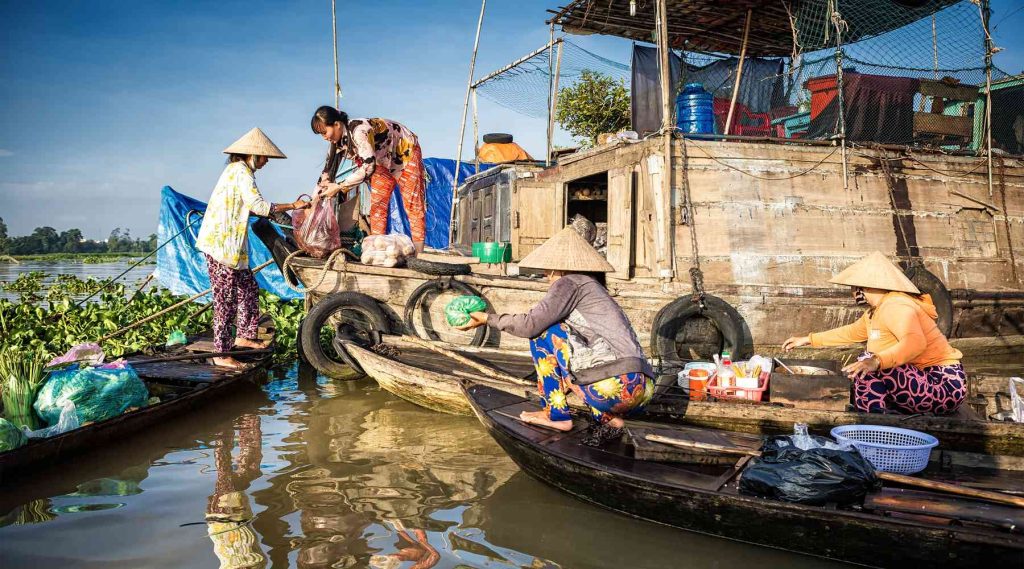
Boats typically stock a single type of produce—bananas, mangoes, coconuts, sugar cane, cassava, or watermelons. Sellers use poles to hang their wares for buyers to see from afar. Negotiations are made boat-to-boat, following traditional market customs.
To visit, rent a small motorboat at Ô Môi Pier, near the central market. Prices range between €12 and €20, depending on group size and itinerary. The experience offers a close-up look at the daily routines of riverine communities.
Ideal for a sunrise trip, Long Xuyen is perfect for enjoying breakfast by the water. Local morning meals include fried noodles with meat, bún riêu, hủ tiếu, and fish-based noodle soups. Those preferring familiar fare can bring packaged snacks for convenience.

The Origin and Legacy of Floating Markets in Southern Vietnam
Floating markets in the Mekong Delta trace their roots back to the region’s reliance on agriculture and fishing. With rivers as the primary means of transportation, locals began trading directly on the water, giving rise to these unique marketplaces.
Beyond commerce, floating markets were also social venues, where residents exchanged news and built community bonds. During the colonial period, these gatherings were restricted by French authorities, forcing people to meet discreetly before dawn. After the Vietnam War, floating markets regained significance as practical trading centers.

Initially developed for trading goods like vegetables and seafood, these markets later expanded to include barter and the sale of cooked meals, beverages, and household goods. Each market—whether Cái Răng, Phong Điền (Can Tho), Long Xuyên (An Giang), Ngã Bảy (Hậu Giang), Ngã Năm (Sóc Trăng), Cái Bè (Tiền Giang), or Trà Ôn (Vĩnh Long)—carries its own traditions and specializations. Some cater to wholesale buyers; others serve daily shoppers. Timings also vary, with some closing by mid-morning, while others stay open longer.
Today, floating markets face mounting challenges. The rise of supermarkets and e-commerce has reduced their importance. COVID-19 intensified these problems, limiting access and shrinking the customer base. Many locals have turned to more modern alternatives, leaving these heritage-rich markets at risk.
Efforts are underway to preserve and restore them. With the right support, these unique markets can thrive once more, offering future generations a glimpse into Vietnam’s cultural past.

When Is the Ideal Time to Visit?
The Mekong Delta experiences two primary seasons: the dry season (December–May) and the rainy season (June–November). Each provides a different perspective for travelers.
During the dry months—especially from December to February—visitors enjoy lush greenery, fresh fruits, and a festive atmosphere around the Lunar New Year. From April to June, although temperatures soar, prices tend to be lower for European travelers.
The rainy season elevates water levels, enhancing the floating market experience. From June to November, fish and other aquatic products dominate, creating a vibrant scene on the rivers.

A visit to these floating markets is a must for anyone exploring southern Vietnam. Though many markets are quieter now than they once were, they remain vital for understanding life along the waterways. Don’t miss the chance to witness this one-of-a-kind way of life—immerse yourself in the unique rhythm of the Mekong.


