Discover the breathtaking beauty of Ha Giang, nestled between the Tay Con Linh mountain range and the Dong Van Karst Plateau.
Immerse yourself in Vietnam’s cultural diversity by visiting traditional Tay minority villages.
Journey through the Dong Van Karst Plateau, one of Asia’s largest geological parks, with its dramatic limestone peaks.
Engage with Hmong women artisans at the Lung Tam linen weaving cooperative and explore the unique clay-walled houses of Pho Cao.
Enjoy a scenic boat ride along the Nho Que River, surrounded by emerald waters and towering limestone cliffs.
Experience Ba Be National Park, the largest natural reserve in Northeast Vietnam, with a relaxing boat trip through its picturesque landscapes.
Commence a journey to Ha Giang, a breathtaking mountainous province nestled in the northern region near the Chinese border, as part of this North Vietnam 5 days itinerary with Kampá Tour. Renowned for its stunning Tay Con Linh range and the captivating Dong Van Karst Plateau, this area has long been a haven for nature and adventure enthusiasts.
Travel through the picturesque sceneries of Phu Tho and Tuyen Quang, offering serene countryside views. Enjoy stops along the way to explore local plantations and agricultural practices.
Arrive in Ha Giang in the early afternoon, and prepare for a delightful walk through the ethnic villages at the base of the Tay Con Linh range: Ban Tha, Ban Ha Thanh, and Ban Tan Thanh. These traditional villages, surrounded by rice fields, latan trees, and lush greenery, are home to the Tay minority. Like the Thais, the Tay people inhabit the lowlands at the foothills of the northern mountains and sustain their livelihood through agriculture and fish farming.
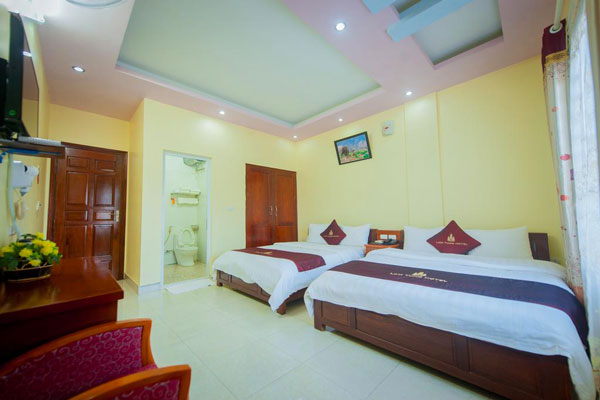
As the afternoon winds down, settle in with the warm and welcoming Doan family, spanning three generations. Enjoy some free time for relaxation.
In the evening, indulge in a delightful dinner with the family, and then retire for the night in their cozy stilt house, marking a perfect start to your North Vietnam 5 days itinerary with Kampá Tour.
Extend warm greetings to our hosts as we continue our journey towards the karst plateau of Dong Van, one of Asia’s largest geological parks. Today’s route winds through twisting roads, navigating dizzying massifs that offer unparalleled and extraordinary landscapes – countless limestone peaks stretching as far as the eye can see. Brace yourself for the most awe-inspiring leg of the trip.
Several planned stops enrich our adventure:
In Lung Tam, explore a Hmong women’s linen factory, where the ancestral craft of linen production is showcased. Discover a wide array of items such as clothing, bags, and wallets inspired by the region’s ethnic cultures.
Visit a quaint neighborhood in Pho Cao, which is adorned with clay houses and tiled roofs that have stood the test of time, offering a glimpse into the architectural traditions of the area.
In Sa Phin, unveil the majestic Vuong Chi Duc Palace. This architectural marvel is a fusion of Chinese and local styles and serves as a testament to the legacy of Vuong Chinh Duc, a renowned king of the Hmong tribes who left his mark during the late 19th and early 20th centuries.
Arrive in Dong Van by late afternoon, check in at the hotel, and enjoy a leisurely evening for rest or strolls in this mountainous haven. Spend the night at the hotel, then take the plunge into the tranquil beauty of the surroundings.
After breakfast, travel along Route 4C toward Ngai Lau, passing the dramatic Ma Pi Leng Pass, known for its towering limestone cliffs. Wind through scenic karst valleys dotted with traditional ethnic minority homes. Pause at Ngai Lau, a peaceful Hmong hamlet, before trekking to Ta Lang, a small pier on the Nho Que River.
Board a boat for a scenic cruise on the emerald-green Nho Que River, flowing from Yunnan and winding between striking limestone cliffs.
After the cruise, continue by road to Bao Lac, a quiet riverside town. Visit Khuoi Khon, a hillside village of the black Lolo people, known for its rice terraces.
Stay overnight in a local homestay, immersing yourself in the Lolo culture amid the serene setting of Khuoi Khon.
Descend into Ba Be National Park, a vast mountainous reserve in Northeast Vietnam, home to the Tay, Dzao, and Hmong minorities. The park features emerald lakes surrounded by lush forests and limestone cliffs.
Upon arrival, enjoy a scenic boat trip on Ba Be Lake—Vietnam’s largest natural lake—spanning 500 hectares across three basins (Pelam, Pelu, and Peleng). Often called “Ha Long Bay in the mountains,” it offers breathtaking views of dense jungle and karst peaks.
Stay with a Tay family in a traditional stilted house. After resting, explore the village and interact with locals whose lives revolve around fishing and rice farming. In the evening, enjoy a homemade dinner and a peaceful overnight stay.
Spend the morning cycling along a scenic path bordered by tropical forests, rice fields, and waterways. Ba Be National Park is home to over 550 plant species and a wide variety of wildlife, including birds, turtles, butterflies, and mammals. Visit the mysterious Hua Ma Cave and explore traditional Tay and Nung villages.
In the afternoon, return to Hanoi, arriving by evening. Relax with a soothing massage at a local spa.
Enjoy your final night in Hanoi. This concludes your 5-day North Vietnam journey. We hope you had a wonderful experience—safe travels!
This estimated price is based on four people staying in standard accommodations and may vary depending on:
The time of travel
The group size
The level of services selected
All accommodations throughout the tour (in hotels or with local families)
Private car transportation as per the itinerary
English-speaking guide for all listed visits
All mentioned activities, including entrance fees
Economy-class domestic flights with airport taxes
Meals specified in the itinerary
Two bottles of water per traveler per day during guided tours
Applicable government taxes (e.g., VAT)
International flights from your home country
Visa fees (payable directly at airport customs – see Visa section)
Bank charges related to payment transactions
Personal travel insurance
Personal drinks during meals (e.g., beer, soft drinks, juices)
Meals not specified in the program
SIM card and mobile data plans
Tips, personal expenses, and any services not listed under “Included Services”
The most favorable time to travel to Northern Vietnam is generally between September and November or from March to May, when the weather is mild and rainfall is minimal.
Accommodation options on these tours range from luxury hotels to budget-friendly guesthouses, catering to various preferences. In cities like Hanoi, you’ll find both modern hotels and cozy boutique stays. In Halong Bay, overnight stays on traditional junk boats offer a memorable experience. In Sapa and other rural areas, homestays with local families are a popular choice, providing cultural immersion and community connection. All accommodations are carefully selected for comfort and convenience throughout your journey.
If you are satisfied with the itinerary suggested by one of our travel advisors, simply send us a confirmation email to proceed with your booking. Your advisor will then send you the necessary documents, including:
A reservation form outlining the details of your tour, along with fields for your personal and contact information. Please complete and return this form, and also provide a scanned copy of your passports.
A travel invoice requesting a 25% deposit of the total trip cost.
Your trip will be officially confirmed once we receive the completed form and the deposit payment. We will then issue a travel contract that summarizes all key information: your travel dates, trip duration, deposit amount, and your contact details.
Northern Vietnam offers a wealth of unforgettable experiences. Begin in Hanoi, the lively capital, where the Old Quarter buzzes with energy and landmarks like the Ho Chi Minh Mausoleum and Temple of Literature reveal the city’s rich history. Cruise through the majestic limestone cliffs of Halong Bay, a UNESCO World Heritage Site. In Sapa, marvel at terraced rice fields and visit ethnic minority villages for an authentic look into local life. Finally, discover Ninh Binh—often called “Halong Bay on land”—with its scenic landscapes and the cultural treasures of the Trang An complex.
Yes, absolutely. You can schedule the trip based on your preferred dates. We specialize in customized travel and will adapt the itinerary to match your availability and interests, ensuring it aligns perfectly with your chosen timeframe or best flight deals.
On tours through Northern Vietnam, you’ll have the chance to see a variety of wildlife across different ecosystems. In protected areas like Cuc Phuong and Ba Be National Parks, you may spot rare species such as the Delacour’s langur, various primates, reptiles, butterflies, and numerous bird species. In Halong Bay, marine life is abundant—keep an eye out for dolphins, fish, and seabirds while cruising. In rural and mountainous regions, you’re likely to see water buffalo, farm animals, and occasionally even wild pigs. These encounters offer a fascinating look into the region’s rich biodiversity and ecological heritage.
Vietnam is made up of three main regions—North, Central, and South—each offering unique landscapes and cultural experiences. The ideal region to visit depends on your personal travel interests.
That said, Northern Vietnam stands out as the most captivating for many visitors. It boasts an exceptional blend of dramatic natural scenery—majestic mountains, meandering rivers, emerald bays, and rice terraces carved into lush valleys. Culturally, it’s equally rich, home to ancient pagodas, historic landmarks, traditional craft villages, and a diverse population of ethnic minorities who maintain vibrant traditions. For these reasons, travelers with flexible schedules often devote a large part of their journey to discovering the North.
Vietnam is served by numerous major international airlines, making it easily accessible from around the world. If you’re flying from the USA, UK, Canada, or Australia, you’ll find frequent service to cities like Hanoi and Ho Chi Minh City via carriers such as Vietnam Airlines, Qatar Airways, Emirates, Singapore Airlines, and Cathay Pacific—with common stopovers in places like Dubai, Doha, or Singapore.
Travelers from North America often opt for airlines like ANA, Japan Airlines, Korean Air, and EVA Air, which typically include connections through Tokyo, Seoul, or Taipei.
Those flying from the UK or Australia can also look into one-stop or connecting flights offered by British Airways, Qantas, or Malaysia Airlines, with convenient layovers in Southeast Asia.
To find the most competitive fares and routes, consider checking airline websites or using flight comparison platforms like Skyscanner, Google Flights, or Kayak.
No, travel insurance is not included in our package rates. You will need to arrange it separately. Fortunately, travel insurance is generally affordable and simple to purchase. Many travelers choose reputable providers such as Allianz Global Assistance, Travel Guard, World Nomads, or AXA Travel Insurance.
It’s also a good idea to check with your bank or credit card company. If you paid for your flight or trip with a credit card, you may already have certain travel insurance benefits included, such as trip cancellation, medical coverage, or baggage protection.
Tipping in Vietnam is not obligatory but is appreciated as a gesture of gratitude for good service. Here’s a general guideline:
Tour Guide: $3–6 USD per traveler per day
Driver: $2–3 USD per traveler per day
Tips can be given in USD, Euro, or Vietnamese Dong, and it’s best to hand them over at the end of each stage of the journey—when you part ways with that guide or driver.
You don’t need to worry about small service tips for cyclo drivers, boat rowers, porters, etc.—these are already included in your package and will be taken care of by your guide, so you can relax and enjoy your trip.